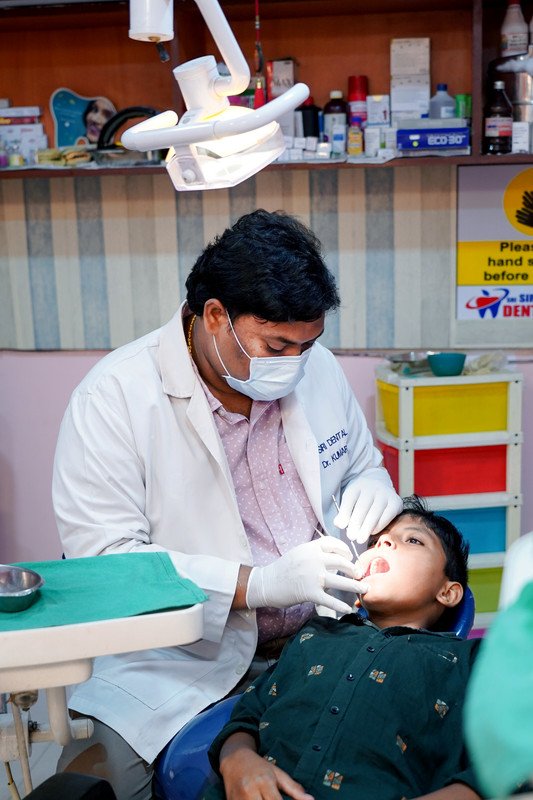
Wisdom teeth, also called third molars, are the last teeth to come through, usually between the late teens and mid-twenties. For some people they come through without any trouble. For others they grow at an angle, stay trapped under the gum or bone, or sit so far back that they are hard to clean, which can lead to pain, infection or damage to nearby teeth.
Wisdom teeth do not always need to be removed. Removal is usually considered when a wisdom tooth causes pain or repeated infection, is decayed, damages a neighbouring tooth, is impacted with related problems, or cannot be kept clean. A dentist decides after an examination and, usually, an X-ray.
What Are Wisdom Teeth, and Why Can They Cause Problems?
There is often not enough room at the back of the jaw for wisdom teeth to come through properly. A tooth that cannot fully come through is called impacted. It may stay under the gum, come through only partly, or lean against the tooth in front.
Problems arise because these teeth are hard to reach with a toothbrush. A partly erupted tooth can have a flap of gum over it that traps food and bacteria, leading to a painful infection called pericoronitis. Wisdom teeth can also develop decay, and they can make the neighbouring second molar harder to keep clean, so it may decay too. Less often, an impacted tooth is associated with a cyst or damage to the bone around it.
Signs a Wisdom Tooth May Need Attention
- Pain or tenderness at the back of the jaw, especially when biting.
- Red, swollen or bleeding gum behind the last molar.
- A bad taste or persistent bad breath from the back of the mouth.
- Difficulty opening your mouth fully, or a stiff jaw.
- Food repeatedly trapped around the tooth.
- Visible decay on the wisdom tooth or on the tooth in front of it.
- Swelling of the cheek or jaw.
Some wisdom teeth have problems before any symptoms appear, and these may only be found at a dental examination or on an X-ray.
Significant facial swelling, a fever with worsening jaw pain, or swelling that is spreading. Difficulty breathing or swallowing, or rapidly spreading swelling of the face or neck, needs emergency medical attention. Do not wait for a routine appointment in these situations.
When Is Removal Recommended, and When Can It Wait?
Removal is usually considered when:
- The tooth has caused repeated infections or pericoronitis.
- The tooth has decay that cannot be restored, or it is damaging the neighbouring tooth.
- The tooth is impacted and linked to pain, infection, a cyst or bone damage.
- Gum disease affects the tooth or the area around it.
- It is in the way of other planned dental treatment, as advised by your dentist.
Monitoring may be reasonable when:
- The tooth is healthy, fully through the gum and can be cleaned properly.
- The tooth is impacted but shows no signs of disease on examination and X-ray, and your dentist plans to review it regularly.
Wisdom teeth are often blamed for crowding of the front teeth, but the evidence for this is limited, so crowding alone is not usually the reason to remove them.
There is no single best age. Removal is often straightforward in the late teens and twenties, when the roots are not yet fully formed, but it can also be done later when it is needed. Your dentist will weigh the benefits and risks for you.
How Is a Wisdom Tooth Assessed?
Assessment starts with a conversation about your symptoms and medical history, followed by an examination of the tooth and the gum around it.
An X-ray is normally needed to see the position of the tooth, its roots and its relationship to nearby structures. A panoramic X-ray is commonly used. For some lower wisdom teeth close to a nerve, or upper teeth close to the sinus, a 3D scan may be advised if it is clinically justified.
Tell your dentist about any medicines you take, especially blood thinners, and about conditions such as diabetes, heart problems or pregnancy, because these can affect how and when treatment is done.
Sri Siri Dental offers oral and maxillofacial services, including wisdom tooth removal. To find out what is right for you, book an assessment.
What Happens During Wisdom Tooth Removal?
- Consent and preparationYour dentist explains the plan, the risks and the aftercare, answers your questions and asks for your consent.
- AnaesthesiaA local anaesthetic numbs the tooth and the surrounding gum. Other options, such as sedation, may be discussed for some cases. Ask which options are available and suitable for you.
- RemovalA tooth that has fully come through is often removed with a straightforward extraction. An impacted tooth may need a small cut in the gum, removal of a little bone and sometimes sectioning the tooth into pieces so it comes out more easily.
- Cleaning and closingThe area is cleaned, and stitches may be placed. You bite on gauze to help the bleeding stop.
- Aftercare instructionsYou receive instructions on bleeding, swelling, medicines, eating and cleaning, along with advice on when to return for review.
A simple extraction can take a few minutes. A surgical removal can take longer, and times vary with the position of the tooth. You should feel pressure and movement but not sharp pain. Tell your dentist straight away if you do feel pain.
Recovery: What to Expect and How to Help Healing
Numbness usually lasts a few hours, and some oozing of blood is common on the first day. Swelling and discomfort often peak around the second or third day and then improve over about a week, although the gum takes longer to heal fully. Recovery differs between people and between simple and surgical removals.
What helps
- Bite gently on gauze as advised to control bleeding, and replace it if needed.
- Use a cold compress on the cheek in the first day or two, as your dentist suggests.
- Rest, and keep your head slightly raised when lying down.
- Take pain relief as prescribed or recommended by your dentist. Do not take aspirin unless advised, because it can increase bleeding.
- Eat soft, cool foods at first, and avoid hot drinks and hard, crunchy or spicy food for a few days.
- After the first 24 hours, rinse gently with warm salt water, and brush your other teeth normally, taking care around the area.
- Keep your follow-up appointment.
What to avoid
- Smoking and tobacco, which slow healing and raise the risk of dry socket.
- Using a straw, spitting forcefully or rinsing hard in the first 24 hours, which can dislodge the blood clot.
- Strenuous exercise for a few days.
- Poking the area with your tongue or fingers.
Dry socket happens when the blood clot in the socket is lost or does not form. Typical signs are pain that gets worse a few days after removal, often with a bad taste or smell. It is treatable, so contact your dentist if you notice these signs.
Bleeding does not stop with firm pressure, swelling increases after the third day, you develop a fever or pus, pain worsens, or numbness in the lip, chin or tongue does not go away. Difficulty breathing or swallowing needs emergency medical attention.
Good cleaning habits also support healing. See our oral health tips for everyday care.
Possible Risks and Complications
Wisdom tooth removal is a common procedure, but like any surgery it carries risks. Your dentist should explain your own risks before you decide.
- Pain, swelling, bruising and bleeding, which are expected to some degree.
- Dry socket.
- Infection.
- Limited mouth opening for a short time.
- Temporary, and rarely lasting, numbness or tingling of the lip, chin or tongue.
- Damage to nearby teeth or fillings.
- For some upper teeth, a connection between the mouth and the sinus, which is uncommon.
Common Questions
Frequently Asked Questions About Wisdom Tooth Removal
Do all wisdom teeth need to be removed?
No. Healthy wisdom teeth that have fully come through and can be cleaned properly may be left in place and checked at routine visits. Removal is considered when there is a problem or a clear risk of one.
Is wisdom tooth removal painful?
The area is numbed, so you should not feel sharp pain during the procedure, although you may feel pressure. Soreness and swelling afterwards are expected and can usually be managed with the pain relief your dentist advises.
How long does recovery take?
Most people feel much better within about a week, with swelling and discomfort easing after the first few days. Complete gum healing takes longer. Recovery depends on how complex the removal was.
Can I go to work or school the next day?
Many people rest for a day or two, but it varies with the complexity of the removal and the type of work you do. Ask your dentist what to expect for your case.
Is wisdom tooth removal safe during pregnancy?
Planned removal is usually postponed until after pregnancy. If an infection or severe pain needs urgent treatment, the dentist will plan the safest approach, sometimes with advice from your doctor. Always tell the clinic if you are pregnant.
What happens if I leave a problem wisdom tooth alone?
Infections can keep coming back and may spread, and decay can damage the neighbouring tooth. Early assessment usually allows simpler treatment than waiting until the problem is severe.
How much does wisdom tooth removal cost?
The cost depends on the position of the tooth, whether the removal is simple or surgical, and the type of anaesthesia, so an examination and X-ray are needed for an accurate estimate.
What can I eat after wisdom tooth removal?
Start with soft, cool foods such as yoghurt, soup that is not hot, mashed potato and soft rice, and chew on the opposite side. Add normal foods gradually as comfort allows, and avoid hard, crunchy and spicy foods for a few days.
Book a Wisdom Tooth Assessment
If you have pain, swelling or an unexplained problem at the back of your mouth, an examination and X-ray can show what is happening and what your options are. Contact Sri Siri Dental to arrange an assessment.
Bata Showroom Building, Main Rd, Near Rajasekhar Reddy Statue, New Gajuwaka, Visakhapatnam, Andhra Pradesh 530026
Monday to Saturday, 9:00 AM – 10:00 PM; Sunday, 10:00 AM – 5:00 PM
Disclaimer: This article provides general information and is not a substitute for an individual dental examination. Treatment decisions should be made with your dentist.